.png "Menu")

Pilgrimage To The tomb of The Father of The Republic Indonesia
Tan Malaka the father of the Republic of Indonesia

Tan Malaka's full name is Ibrahim Title Datuk Sutan Malacca. His real name was Ibrahim, but he was known both as a child and as an adult as Tan Malaka, an honorary and semi-noble name, he inherited from his mother's noble background. He was born in Nagari Pandam Gadang, Fifty Cities District, West Sumatra, which at that time was under the rule of the Dutch East Indies. His date of birth is unclear, and varies from source to source, but is likely between 1894 and 1897.
His father is HM. Rasad Caniago, a farm worker, and his mother, Rangkayo Sinah Simabur, the daughter of a prominent figure in the village. As a child, Tan Malaka lived with his parents in Suliki, and studied religion and was trained in the martial art of pencak silat. In 1908, Tan Malaka attended Kweekschool, a government teacher's school, in Fort de Kock. At Kweekschool, Tan Malaka learned Dutch and became a skilled soccer player. According to his teacher, G. H. Horensma, although Tan was sometimes disobedient, he was an excellent student. He graduated in 1913, and returned to his village. His return will be marked by the awarding of a high customary title as datuk and an offer of fiancé. However, he only received titles. He managed to get money from the village to continue his education abroad, and he sailed for Rotterdam that same year.
Tan Malaka received the title of National Hero based on RI Decree No. 53 which was signed by President Soekarno on March 28, 1963. The title was obtained because Tan Malaka made a contribution to the Indonesian nation, even though he is known as a controversial figure. Tan Malaka and his followers died after being arrested in Pethok, Kediri, East Java. There, he was executed by shooting.
1. Executed by the Nation Alone In his book entitled 'Tan Malaka Left Movement, and the Indonesian Revolution Volume 4: September 1948-December 1949', Poeze tries to unravel the mystery of Tan Malaka's death through his research for 40 years. According to Poeze, Tan Malaka died as a result of being executed on February 21, 1949 by troops from the Brushan Battalion, Brawijaya Division, in Selopanggung, Kediri, East Java. The order came from Lieutenant Soekotjo, who, according to Poeze, was the most opinionated right-winger that Tan Malaka should be killed.
2. Shot After Having Escaped Initially, Tan Malaka was ambushed by the Indonesian Republican Army while at his headquarters in Pace, East Java. However, the arrest was not carried out, until finally he and 60 of his followers were released. Tan Malaka and his followers then fled to the south of East Java. However, during the trip, the group was shot at by a group of armed men and finally they split into four groups. Tan Malaka and his four followers then went to the Tulungagung area to look for an army battalion there who still sympathized with them. However, two days later, they were suddenly ambushed in a small village called Selo Panggung and Tan Malaka was shot dead in this place.
3. The suspect was not tried Tan Malaka was executed after previously being released from detention without going through a trial process for two and a half years. According to Poeze, the party that was in charge of the execution process, Soekotjo, did not even receive orders from superiors or the leadership of the Indonesian army. Before finally being exposed by Poeze, Tan Malaka's death was initially very hushed up. Poeze said that the death of the founder of the Murba Party was kept secret for many years. In fact, there are no reports of further investigation of Tan Malaka's death. Until now, the justice of the Tan Malaka case has not been clarified. Even so, his family admitted that they were sincere and only asked for state recognition of Tan Malaka's heroic rights which had been obscured so far.


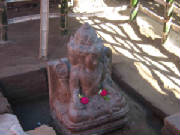
 Ing Saka 706 cetra nasa danami sakla pa ka sa wara, angdhiri rake panaraban", meaning: in the year Saka 706 or 734 AD, reigned as King Pake Panaraban. Negara Kertagama and the Calon Arang Book. The same goes for several inscriptions that mention the name Kediri such as: Ceber Inscription, dated 1109 Saka which is located in Ceker Village, now Sukoanyar Village, Mojo District