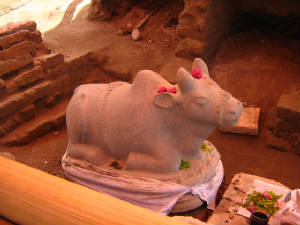
Pilgrimage To The tomb of The Father of The Republic Indonesia

0 Comments

 Tan Malaka the father of the Republic of Indonesia

 
   Tan Malaka or Ibrahim Title Datuk Sutan Malaka (2 June 1897 – 21 February 1949) was a teacher, philosopher, Indonesian freedom fighter, founder of the Murba Party, one of Indonesia's National Heroes, and author of Naar de Republiek Indonesia, the first book written by native Indians The Netherlands to describe the idea of ​​an independent Dutch East Indies as Indonesia, for this reason, Tempo magazine gave the nickname Tan Malaka as 'Father of the Republic'.

    Tan Malaka's full name is Ibrahim Title Datuk Sutan Malacca. His real name was Ibrahim, but he was known both as a child and as an adult as Tan Malaka, an honorary and semi-noble name, he inherited from his mother's noble background. He was born in Nagari Pandam Gadang, Fifty Cities District, West Sumatra, which at that time was under the rule of the Dutch East Indies. His date of birth is unclear, and varies from source to source, but is likely between 1894 and 1897.

    His father is HM. Rasad Caniago, a farm worker, and his mother, Rangkayo Sinah Simabur, the daughter of a prominent figure in the village. As a child, Tan Malaka lived with his parents in Suliki, and studied religion and was trained in the martial art of pencak silat. In 1908, Tan Malaka attended Kweekschool, a government teacher's school, in Fort de Kock. At Kweekschool, Tan Malaka learned Dutch and became a skilled soccer player. According to his teacher, G. H. Horensma, although Tan was sometimes disobedient, he was an excellent student. He graduated in 1913, and returned to his village. His return will be marked by the awarding of a high customary title as datuk and an offer of fiancé. However, he only received titles. He managed to get money from the village to continue his education abroad, and he sailed for Rotterdam that same year.

    Tan Malaka received the title of National Hero based on RI Decree No. 53 which was signed by President Soekarno on March 28, 1963. The title was obtained because Tan Malaka made a contribution to the Indonesian nation, even though he is known as a controversial figure. Tan Malaka and his followers died after being arrested in Pethok, Kediri, East Java. There, he was executed by shooting.

1. Executed by the Nation Alone     In his book entitled 'Tan Malaka Left Movement, and the Indonesian Revolution Volume 4: September 1948-December 1949', Poeze tries to unravel the mystery of Tan Malaka's death through his research for 40 years.     According to Poeze, Tan Malaka died as a result of being executed on February 21, 1949 by troops from the Brushan Battalion, Brawijaya Division, in Selopanggung, Kediri, East Java. The order came from Lieutenant Soekotjo, who, according to Poeze, was the most opinionated right-winger that Tan Malaka should be killed.

2. Shot After Having Escaped     Initially, Tan Malaka was ambushed by the Indonesian Republican Army while at his headquarters in Pace, East Java. However, the arrest was not carried out, until finally he and 60 of his followers were released.     Tan Malaka and his followers then fled to the south of East Java. However, during the trip, the group was shot at by a group of armed men and finally they split into four groups.     Tan Malaka and his four followers then went to the Tulungagung area to look for an army battalion there who still sympathized with them. However, two days later, they were suddenly ambushed in a small village called Selo Panggung and Tan Malaka was shot dead in this place.

3. The suspect was not tried     Tan Malaka was executed after previously being released from detention without going through a trial process for two and a half years. According to Poeze, the party that was in charge of the execution process, Soekotjo, did not even receive orders from superiors or the leadership of the Indonesian army.     Before finally being exposed by Poeze, Tan Malaka's death was initially very hushed up. Poeze said that the death of the founder of the Murba Party was kept secret for many years. In fact, there are no reports of further investigation of Tan Malaka's death.     Until now, the justice of the Tan Malaka case has not been clarified. Even so, his family admitted that they were sincere and only asked for state recognition of Tan Malaka's heroic rights which had been obscured so far.


0 komentar:

Traces of women's struggles in the era of the Khadiri kingdom

0 Comments


    Located in the middle of a sugarcane field in Sukorejo Village, Gurah District, Kediri Regency, this historic site is shrouded in unforgettable horror stories. The 200 square meter land is believed to be Calon Arang's place of origin. She is the widow of a deadly plague spreader, which killed thousands of Kediri residents during the reign of King Airlangga in the 12th century.

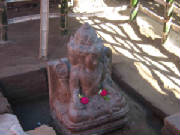
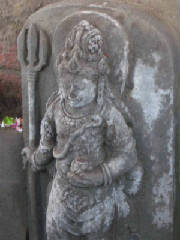
    The Calon Arang site is in a fairly hidden location. The only access to the site can only be reached by motorbike or on foot because it is in the middle of a lush sugar cane plantation. At the end of the path you will find a building in the form of a pendapa which stores a number of archaeological objects. Ganesa statues, pedestals or house foundations, and small cylindrical stone blocks, are believed to be evidence of Calon Arang's existence. Right to the north of the pendopa, there are also semi-statue stones which have been carved in several parts. The scattered stones are under a preh tree and fenced with an iron frame.

    Groups of pilgrims from Bali usually visit the Calon Arang site in the month of Suro in the Javanese calendar. In one visit, the number of residents of the Island of the Gods who came reached hundreds of people. "The land at the Calon Arang site was even wanted to be bought by the Balinese, but the owner didn't allow it," said Agus (site caretaker).

    The story of Calon Arang continues to be discussed in Bali, rather than in her native land, Java. In Balinese tradition, the story of the magic widow is written in a geguritan script called Serat Calon Arang. The song was written on 51 sheets of palm leaves using Balinese script in 1462 Saka or 1540 AD. Written evidence of Calon Arang's existence is currently stored in the National Library"The Hindu Balinese people honor Calon Arang as a mother who maintains the image of a woman," said Zaenuri, who is also the caretaker at the Calon Arang site. In terms of management, the Calon Arang site has been under the auspices of the Kediri Regency Tourism Office since 2018. In terms of operational maintenance and supervision of the cultural heritage, the agency is working with the government of Sukorejo Village, Gurah. Among them recruiting residents like Zaenuri and Agus to become caretakers.

    Even though it is spiritually believed to be Calon Arang's residence, unfortunately this has not been proven archaeologically. At the site, there was not a single clue that confirmed that this place had anything to do with Calon Arang. In fact, some of the carved stones do not reveal information like inscriptions or other ancient textsThis was confirmed by the Kediri Regency Tourism Office through an information board in the south of the pendapa. The board reads that in the study of archeology, this site cannot be called the remains of Calon Arang or Nyi Girah. However, the local wisdom of the community is still well preserved along with the existence of this site.

    In 2012, a joint excavation was held between the Yogyakarta Archaeological Center, the East Java BPCB, and the Kediri Regency Disbudpar. The results obtained are the discovery of brick structures on the east and north of the site. The structure is thought to have been built during the Majapahit period in 1293-1478 AD. Although there is no archaeological evidence yet, the site is trusted because there is a match in terms of toponymy or the naming of the area. In the Calon Arang fiber, he is said to live in the village of Girah or Dirah which is similar to the name Gurah in Kediri Regency. In addition, belief through storytelling is embedded in the minds of the people of Kediri and Bali. A widow named Calon Arang is remembered as a parent who desperately defended her child, Ratna Manggali. Calon Arang felt humiliated when no one wanted to marry her child. Devotees of Goddess Durga then spread a terrible plague as a way of protecting the family's dignity.


0 komentar:

Kediri The City of Tofu

0 Comments


    Kediri is a small city in the province of East Java which is located in Indonesia, this small town has a lot of tourism potential such as Simpang Lima Gumul which is similar to the Arc de Triomphe Paris. Geographically, Kediri is squeezed by 2 mountains between Mount Kelud and Mount Wilis.     In the history of Kediri also had a large kingdom named Khadiri which was well-known namely King Jayabaya, in its history King Jayabaya had predicted things that would happen on the archipelago and until now they are still considered relevant by the community.     If you are now in Kediri then I welcome you to Kediri, don't forget the culinary tour on Jl. Dhaha and souvenirs on Jl. Panglima Polim

0 komentar:

HISTORY OF KEDIRI DISTRICT

0 Comments

 MARCH 25, 804 AD WAS DETERMINED TO BE KEDIRI'S ANNIVERSARY

There are those who think that the name Kediri comes from the word "KEDI" which means "MANDUL" or "Woman who does not have menstruation". According to the Old Javanese dictionary Wojo Wasito, 'KEDI" means Castration Midwife or Shaman. In the Wayang play, Sang Arjuno once disguised as a dance teacher in the State of Wirata, named "KEDI WRAKANTOLO".If we relate it to the name of the figure of Dewi Kilisuci who meditated in the Selomangleng Cave, "KEDI" means Sacred or Wadad.

Besides that, the word Kediri comes from the word "DIRI" which means Adeg, Angdhiri, attends or becomes King (Jumenengan Javanese). For this reason, we can read the "WANUA" inscription in 830 Saka, which among other things reads : "Ing Saka 706 cetra nasa danami sakla pa ka sa wara, angdhiri rake panaraban", meaning: in the year Saka 706 or 734 AD, reigned as King Pake Panaraban. Negara Kertagama and the Calon Arang Book. The same goes for several inscriptions that mention the name Kediri such as: Ceber Inscription, dated 1109 Saka which is located in Ceker Village, now Sukoanyar Village, Mojo District .

In this inscription it is stated that because the people of Ceker rendered service to the King, they received a gift, “Land of Perdikan”. The inscription reads “Sri Maharaja Masuk Ri Siminaninaring Bhuwi Kadiri” meaning that the king has returned to his kingdom, or his hope in Bhumi Kadiri. The Kamulan inscription is in Kamulan Village, Trenggalek Regency, who departed in 1116 Saka, to be precise according to Damais on August 31, 1194. The inscription also mentions the name, Kediri, which was attacked by the king of the eastern kingdom."Aka ni satru wadwa kala sangke purnowo", until the king left his palace in Katangkatang ("when nin kentar sangke cadetwan ring katang-katang deni nkir malr yatik kaprabon sri maharaja siniwi ring bhumi kadiri"). According to Mr. MM. Sukarto Kartoatmojo mentioned 

that the "birthday of Kediri" appeared for the first time from three Harinjing A-B-C inscriptions, but in his opinion, the name Kadiri was the most appropriate to appear on the three inscriptions.

The reason is that the Harinjing A inscription dated March 25 804 AD is considered to be older than the two inscriptions B and C, namely September 19 921 and June 7 1015 AD. Judging from the three dates, the name Kediri was set on March 25 804 AD. Bagawantabhari received the gift of a fief from King Rake Layang Dyah Tulodong which is written on the three Harinjing inscriptions. The name Kediri was originally small and then developed into the name of the large Panjalu Kingdom and whose history is famous until now. Subsequently, the Decree of the Regent to the Level II Region of Kediri was stipulated on January 22, 1985 number 82 of 1985 concerning the anniversary of Kediri, which article 1 reads "March 25, 804 AD was designated as the Anniversary of Kediri.


CARVING KEDIRI THROUGH THE HANDS OF BHAGAWAANTA BARI.

It is possible that Kediri would not have appeared on the historical stage, had it been said that Bagawanta Bhari, a spiritual leader from the Culanggi Village section, had not received an award from Sri Maharaja Rake Layang Dyah Tuladong. It can be said that at that time, Bagawanta Bhari, was like receiving the Parasamya Purnakarya Nugraha award, if that were to happen today. Or maybe it's like getting the Kalpataru award as the Savior of the Environment. Indeed, Bagawanta Bhari's work at that time was how this spiritual figure's efforts to save the environment from the raging annual floods that threatened his area.

This selfless dedication finally made him a role model, as well as an idol for the people at that time. in the form of the honorary title "Wanuta Rama" (respectable father or Village Head) and is not subject to various types of taxes (Mangilaladrbyahaji) in areas controlled by Bagawanta Bharisuch as Culanggi and its Kabiku area. 

Meanwhile, areas such as the Warukgulung and Wilang areas were only subject to "I mas Suwarna" to Sri Maharaja every month. (Duties related to water), "God Tuha trade" (Head of trade), "Tuha hujamman" (Chairman of the Community Group), "Manghuri" (Pujangga Kraton), "Pakayungan Pakalangkang" (Grand granary fee), "Pamanikan" ( Dues beads, gems) and many other taxes. At that time there was also no certificate of appreciation for him. then as a warning for his services, an inscription was made as "Pngeleng-eleng" (Remembrance). The inscription is named "HARINJING" B" which is in AD 19 September 921 AD. And it is called "Happy Saka year has passed 843, month of Asuji, the fifteenth of the bright half, paringkelan Haryang, Umanis (legi). Buddhawara (Wednesday), Naksatra (star) Uttara Bhadrawada, ahnibudhana gods, wrsa yoga.

According to research from experts from the Javanology Institute, Drs. M.M. Soekarton Kartoadmodjo, Kediri was born in March 804 AD. Around that year, Kediri began to be mentioned as a place and country name. There are no official sources such as inscriptions or other written documents that can say when Kediri actually became the center of a government or as a place. From the inscriptions found at that time, there was still no separation of administrative areas as it is today. Namely the existence of the Kediri Regency and Kodya, so that the current Kediri Anniversary still belongs to two regions with two regional heads as well. According to experts, both Kadiri and Kediri both originate from Sanskrit, in etymology "Kadiri" is referred to as " Kedi" which means "barren", does not menstruate (aphrodite). In Old Javanese, "Kedi" also means "castrated" or a shaman.

According to Drs. M.M. Soekarton Kartoadmodjo, the name Kediri has nothing to do with "Kedi" or the tokok "Rara Kilisuci". However, it comes from the word "diri" which means "adeg" (standing) which gets the prefix "Ka" which in Old Javanese means "Being a King". So the opinion that links Kediri with women, especially with Kedi, is unfounded. According to Drs. Soepomo Poejo Soedarmo, in the Malay dictionary, the words "Kediri" and "Kendiri" often replace their own words. Changes in the pronunciation of "Kadiri" to "Kediri" according to Drs. Soepomo has at least two symptoms. The first, symptoms of old age and symptoms of informalization. This is based on habits in the western Austronesian language family, where such changes often occur.

0 komentar: