.png "Menu")

HISTORY OF KEDIRI DISTRICT
MARCH 25, 804 AD WAS DETERMINED TO BE KEDIRI'S ANNIVERSARY
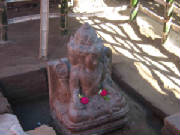
There are those who think that the name Kediri comes from the word "KEDI" which means "MANDUL" or "Woman who does not have menstruation". According to the Old Javanese dictionary Wojo Wasito, 'KEDI" means Castration Midwife or Shaman. In the Wayang play, Sang Arjuno once disguised as a dance teacher in the State of Wirata, named "KEDI WRAKANTOLO".If we relate it to the name of the figure of Dewi Kilisuci who meditated in the Selomangleng Cave, "KEDI" means Sacred or Wadad.
Besides that, the word Kediri comes from the word "DIRI" which means Adeg, Angdhiri, attends or becomes King (Jumenengan Javanese). For this reason, we can read the "WANUA" inscription in 830 Saka, which among other things reads : "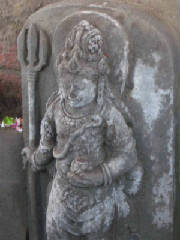 Ing Saka 706 cetra nasa danami sakla pa ka sa wara, angdhiri rake panaraban", meaning: in the year Saka 706 or 734 AD, reigned as King Pake Panaraban. Negara Kertagama and the Calon Arang Book. The same goes for several inscriptions that mention the name Kediri such as: Ceber Inscription, dated 1109 Saka which is located in Ceker Village, now Sukoanyar Village, Mojo District .
In this inscription it is stated that because the people of Ceker rendered service to the King, they received a gift, “Land of Perdikan”. The inscription reads “Sri Maharaja Masuk Ri Siminaninaring Bhuwi Kadiri” meaning that the king has returned to his kingdom, or his hope in Bhumi Kadiri. The Kamulan inscription is in Kamulan Village, Trenggalek Regency, who departed in 1116 Saka, to be precise according to Damais on August 31, 1194. The inscription also mentions the name, Kediri, which was attacked by the king of the eastern kingdom."Aka ni satru wadwa kala sangke purnowo", until the king left his palace in Katangkatang ("when nin kentar sangke cadetwan ring katang-katang deni nkir malr yatik kaprabon sri maharaja siniwi ring bhumi kadiri"). According to Mr. MM. Sukarto Kartoatmojo mentioned
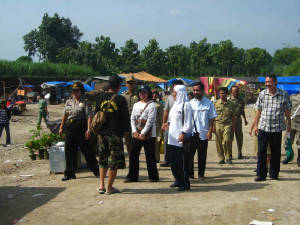
that the "birthday of Kediri" appeared for the first time from three Harinjing A-B-C inscriptions, but in his opinion, the name Kadiri was the most appropriate to appear on the three inscriptions.The reason is that the Harinjing A inscription dated March 25 804 AD is considered to be older than the two inscriptions B and C, namely September 19 921 and June 7 1015 AD. Judging from the three dates, the name Kediri was set on March 25 804 AD. Bagawantabhari received the gift of a fief from King Rake Layang Dyah Tulodong which is written on the three Harinjing inscriptions. The name Kediri was originally small and then developed into the name of the large Panjalu Kingdom and whose history is famous until now. Subsequently, the Decree of the Regent to the Level II Region of Kediri was stipulated on January 22, 1985 number 82 of 1985 concerning the anniversary of Kediri, which article 1 reads "March 25, 804 AD was designated as the Anniversary of Kediri.
CARVING KEDIRI THROUGH THE HANDS OF BHAGAWAANTA BARI.
It is possible that Kediri would not have appeared on the historical stage, had it been said that Bagawanta Bhari, a spiritual leader from the Culanggi Village section, had not received an award from Sri Maharaja Rake Layang Dyah Tuladong. It can be said that at that time, Bagawanta Bhari, was like receiving the Parasamya Purnakarya Nugraha award, if that were to happen today. Or maybe it's like getting the Kalpataru award as the Savior of the Environment. Indeed, Bagawanta Bhari's work at that time was how this spiritual figure's efforts to save the environment from the raging annual floods that threatened his area.
This selfless dedication finally made him a role model, as well as an idol for the people at that time. in the form of the honorary title "Wanuta Rama" (respectable father or Village Head) and is not subject to various types of taxes (Mangilaladrbyahaji) in areas controlled by Bagawanta Bhari, such as Culanggi and its Kabiku area.
Meanwhile, areas such as the Warukgulung and Wilang areas were only subject to "I mas Suwarna" to Sri Maharaja every month. (Duties related to water), "God Tuha trade" (Head of trade), "Tuha hujamman" (Chairman of the Community Group), "Manghuri" (Pujangga Kraton), "Pakayungan Pakalangkang" (Grand granary fee), "Pamanikan" ( Dues beads, gems) and many other taxes. At that time there was also no certificate of appreciation for him. then as a warning for his services, an inscription was made as "Pngeleng-eleng" (Remembrance). The inscription is named "HARINJING" B" which is in AD 19 September 921 AD. And it is called "Happy Saka year has passed 843, month of Asuji, the fifteenth of the bright half, paringkelan Haryang, Umanis (legi). Buddhawara (Wednesday), Naksatra (star) Uttara Bhadrawada, ahnibudhana gods, wrsa yoga.
According to research from experts from the Javanology Institute, Drs. M.M. Soekarton Kartoadmodjo, Kediri was born in March 804 AD. Around that year, Kediri began to be mentioned as a place and country name. There are no official sources such as inscriptions or other written documents that can say when Kediri actually became the center of a government or as a place. From the inscriptions found at that time, there was still no separation of administrative areas as it is today. Namely the existence of the Kediri Regency and Kodya, so that the current Kediri Anniversary still belongs to two regions with two regional heads as well. According to experts, both Kadiri and Kediri both originate from Sanskrit, in etymology "Kadiri" is referred to as " Kedi" which means "barren", does not menstruate (aphrodite). In Old Javanese, "Kedi" also means "castrated" or a shaman.
According to Drs. M.M. Soekarton Kartoadmodjo, the name Kediri has nothing to do with "Kedi" or the tokok "Rara Kilisuci". However, it comes from the word "diri" which means "adeg" (standing) which gets the prefix "Ka" which in Old Javanese means "Being a King". So the opinion that links Kediri with women, especially with Kedi, is unfounded. According to Drs. Soepomo Poejo Soedarmo, in the Malay dictionary, the words "Kediri" and "Kendiri" often replace their own words. Changes in the pronunciation of "Kadiri" to "Kediri" according to Drs. Soepomo has at least two symptoms. The first, symptoms of old age and symptoms of informalization. This is based on habits in the western Austronesian language family, where such changes often occur.


0 komentar: